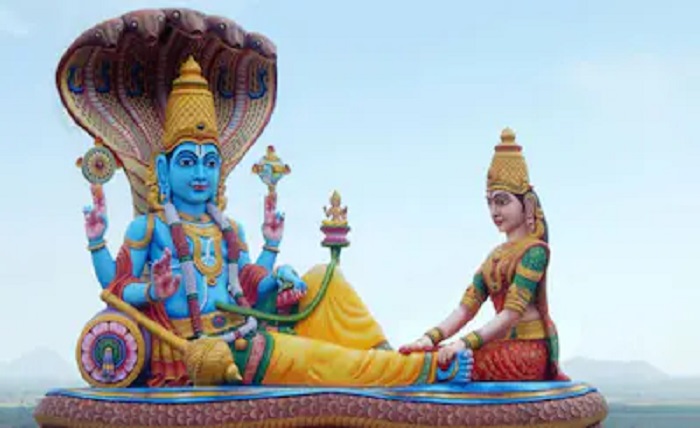
The question “ekadashi kab hai” resonates in the hearts of millions of devout Hindus, marking a time for spiritual reflection, prayer, and fasting. This sacred day, dedicated to Lord Vishnu, is observed twice every month, offering a regular rhythm of devotion that punctuates the lunar calendar. For those seeking to align their spiritual practice with the ancient Vedic traditions, knowing the precise date and time of Ekadashi is essential. The significance of this day, ekadashi kab hai, is not just about abstaining from food but about purifying the mind and soul, drawing closer to the divine, and reaping profound spiritual benefits. Let’s delve deep into the meaning, dates, and rituals of Ekadashi, answering all your questions about when and how to observe it .
What is Ekadashi and Why is it So Auspicious?
Understanding the answer to “ekadashi kab hai” begins with understanding what Ekadashi is. Ekadashi is the eleventh lunar day, or tithi, in the Hindu calendar, occurring twice a month—once during the waxing phase (Shukla Paksha) and once during the waning phase (Krishna Paksha) of the moon . The term itself is derived from the Sanskrit words “eka” (eleven) and “dashi” (a group of ten), simply meaning “the eleventh.” This is considered the day of Lord Hari (Vishnu), making it one of the most auspicious days for fasting and devotional service . But what makes this specific day, ekadashi kab hai, so significant? The answer lies in the intricate relationship between the moon, the mind, and the subtle energy centres (chakras) in the human body . As per spiritual texts, the moon’s gravitational pull has a profound effect on the mind. On the eleventh day of each fortnight, the mind is naturally in a state of concentration, making it an ideal time for deep meditation and spiritual practice. Fasting is recommended to keep the body light, thereby facilitating the mind’s focus on the divine .
Ekadashi Kab Hai: The Complete 2026 Calendar
The primary question on every devotee’s mind is, “ekadashi kab hai?” Here is the complete list of Ekadashi dates for 2026, according to the Drik Panchang and other sources . These dates are crucial for planning your fasting schedule for the entire year. Remember, the exact date and time for breaking the fast (Parana) are equally important and are detailed in the following sections.
Ekadashi Calendar 2026 (Dates, Name & Paksha) :
-
January 13, 2026 (Tuesday): Shattila Ekadashi (Krishna Paksha)
-
January 28, 2026 (Wednesday): Putrada Ekadashi (Shukla Paksha)
-
February 12, 2026 (Thursday): Jaya Ekadashi (Krishna Paksha)
-
February 27, 2026 (Friday): Vijaya Ekadashi (Shukla Paksha)
-
March 15, 2026 (Sunday): Papmochani Ekadashi (Krishna Paksha)
-
March 29, 2026 (Sunday): Amalaki Ekadashi (Shukla Paksha)
-
April 13, 2026 (Monday): Varuthini Ekadashi (Krishna Paksha)
-
April 27, 2026 (Monday): Kamada Ekadashi (Shukla Paksha)
-
May 13, 2026 (Wednesday): Apara Ekadashi (Krishna Paksha)
-
May 27, 2026 (Wednesday): Mohini Ekadashi (Shukla Paksha)
-
June 11, 2026 (Thursday): Parama Ekadashi (Krishna Paksha)
-
June 25, 2026 (Thursday): Nirjala Ekadashi (Shukla Paksha)
-
July 10, 2026 (Friday): Yogini Ekadashi (Krishna Paksha)
-
July 25, 2026 (Saturday): Devshayani Ekadashi (Shukla Paksha)
-
August 9, 2026 (Sunday): Kamika Ekadashi (Krishna Paksha)
-
August 23, 2026 (Sunday): Shravan Putrada Ekadashi (Shukla Paksha)
-
September 7, 2026 (Monday): Aja Ekadashi (Krishna Paksha)
-
September 22, 2026 (Tuesday): Parivartini Ekadashi (Shukla Paksha)
-
October 6, 2026 (Tuesday): Indira Ekadashi (Krishna Paksha)
-
October 22, 2026 (Thursday): Papankusha Ekadashi (Shukla Paksha)
-
November 5, 2026 (Thursday): Rama Ekadashi (Krishna Paksha)
-
November 20, 2026 (Friday): Utthana (Devutthana) Ekadashi (Shukla Paksha)
-
December 4, 2026 (Friday): Utpanna Ekadashi (Krishna Paksha)
-
December 20, 2026 (Sunday): Mokshada / Vaikuntha Ekadashi (Shukla Paksha)
Demystifying the Dates: July 10 or 11? A Case Study
One of the most common confusions when asking “ekadashi kab hai” arises from the fact that the exact date can vary depending on the tradition you follow, or because the Ekadashi tithi may begin on one day and end on the next. A perfect example is Yogini Ekadashi in 2026 . So, when is Yogini Ekadashi? Let’s break it down. In July 2026, the Ekadashi tithi begins on July 10, 2026, at 8:16 AM and ends on July 11, 2026, at 5:22 AM . The question of whether to observe the fast on July 10 or July 11 is answered by two different principles:
-
Smarta Tradition (Householders): According to the Udaya Tithi principle, the fast is observed on the day the Ekadashi tithi is prevailing at sunrise. In this case, since the tithi is active at sunrise on July 10, householders will observe the fast on July 10, Friday . The Parana (breaking of the fast) for this tradition is then performed on July 11 during the designated window .
-
Vaishnava Tradition: Followers of the Vaishnava tradition, such as those in ISKCON, follow a different rule. They ensure that the tithi covers the sunrise period of the fasting day completely. Therefore, they will observe Yogini Ekadashi on July 11, Saturday . The Parana for this tradition is then typically on July 12 .
Neither date is ‘wrong’ or ‘right’—both are valid and followed with great devotion . This is a perfect example of why knowing the specifics of your tradition is vital when asking “ekadashi kab hai.”
How to Observe Ekadashi: Rituals, Fasting Rules, and Parana
Observing Ekadashi involves more than just not eating. It is a day dedicated to spiritual upliftment. When you plan for “ekadashi kab hai,” you must also plan how to observe it. Here are the key components:
-
Fasting Rules: The fast is primarily an abstinence from food grains, cereals, and beans (pulses) . This includes rice, wheat, lentils, and even products made from them. The goal is to minimize the body’s digestive load so more energy can be directed toward spiritual activities . There are various levels of fasting, from a complete Nirjala fast (without food and water) to a simple fruit-and-milk diet . One may choose a level that suits their health and capacity .
-
Spiritual Activities: The true purpose of the Ekadashi fast is to increase one’s faith and devotion . You should spend the day in remembrance of the Lord. This includes chanting the Hare Krishna maha-mantra, reading scriptures like the Bhagavad Gita and Srimad Bhagavatam, and visiting a temple dedicated to Lord Vishnu .
-
Puja Muhurat (Auspicious Time to Worship): To answer “ekadashi kab hai” for worship, there are specific auspicious time frames (muhurats) on the day of Ekadashi when you can perform your puja. For instance, for Yogini Ekadashi 2026, the Brahma Muhurat is from 4:41 AM to 5:24 AM, and the Abhijit Muhurat is from 12:17 PM to 1:10 PM .
-
Parana (Breaking the Fast): This is the crucial step of breaking the fast. It must be done on the next day, during the Dwadashi (the 12th lunar day) tithi . The exact Parana time is as important as the fast itself. For example, for Yogini Ekadashi 2026, the Parana time for those who fasted on July 10 is July 11, roughly between 1:50 PM and 4:40 PM . Always check the Parana time specific to your location and tradition.
The Significance and Stories (Katha) of Ekadashi
The question “ekadashi kab hai” is incomplete without understanding the story or legend (katha) that gives each Ekadashi its unique meaning. Observing Ekadashi without knowing its significance is like walking a path without knowing the destination. Each Ekadashi has a specific story that illustrates its power to absolve sins and grant divine blessings .
-
The Story of Yogini Ekadashi: A king named Kuber ruled the heavenly city of Alkapuri. A gardener named Hem was tasked with bringing flowers for the King’s worship of Lord Shiva. One day, Hem was so captivated by his wife’s beauty that he neglected his duty. The King, enraged, cursed Hem to be separated from his wife and suffer from a skin disease. Wandering in a forest, Hem met Sage Markandeya, who advised him to observe the Yogini Ekadashi fast to atone for his sin. Hem followed the sage’s advice with full devotion and regained his health and, eventually, his place in the kingdom . This story, when reflected upon while asking “ekadashi kab hai,” reminds us that devotion can overcome our deepest flaws.
-
The Spiritual Aspect: On a deeper level, Ekadashi is a powerful tool for self-purification. In the Brahma-vaivarta Purana, it is said that one who observes a fast on Ekadashi is freed from all reactions to sinful activities and advances in pious life . The Padma Purana also states that even if one by trickery follows Ekadashi, all of their sins are absolved and they easily attain the supreme goal . This shows the immense mercy of Lord Vishnu on this day, answering the question of “why” behind “ekadashi kab hai”.
Conclusion
The spiritual act of observing Ekadashi is a profound journey of self-discipline and devotion. The answer to ekadashi kab hai is not just a date on a calendar, but an invitation to align your life with the rhythm of the cosmos and the divine. By understanding the correct dates, rituals, and the profound spiritual significance that each Ekadashi holds, you can transform this observance into a powerful tool for inner purification and spiritual growth. Whether you are a seasoned devotee or a newcomer looking to explore your spiritual side, the tradition of Ekadashi offers a structured and sacred path to connect with the Supreme. Refer back to this guide whenever you ask, “ekadashi kab hai?”, and let your observance be a step towards peace, prosperity, and spiritual fulfillment.
FAQs
1. What is the exact meaning of “ekadashi kab hai”?
“Ekadashi kab hai” is the Hindi phrase for “when is Ekadashi?” It is a common question among devotees looking to find the exact dates for the Ekadashi fasts in the Hindu lunar calendar. It can refer to the next upcoming Ekadashi or a specific one in the future.
2. Is there a difference between the dates of Ekadashi for different people?
Yes, there can be slight variations. As seen with Yogini Ekadashi 2026, the date can differ between the Smarta (householder) tradition and the Vaishnava tradition due to different rules for calculating the sunrise tithi . It is always best to check a reliable Panchang or consult your family’s traditions for the exact date.
3. Can I drink water while fasting on Ekadashi?
Yes, there are different levels of fasting. While a Nirjala fast is a complete fast without food or water, many devotees choose to observe the fast by taking only water . Others may take milk and fruits. The level of fasting depends on an individual’s health and capacity .
4. What should be the Parana time for breaking the Ekadashi fast?
The fast must be broken on the next day, which is the Dwadashi (12th lunar day) tithi, after sunrise and within the prescribed Parana window . The specific time varies for each Ekadashi and for different locations. For instance, for a fast observed on July 10, 2026, the Parana time is on July 11 .
5. What are the main foods to avoid on Ekadashi?
The primary rule is to avoid all food grains, cereals, and beans (pulses) . This includes rice, wheat, corn, chickpeas, and lentils. Even grains found in spices like powdered asafoetida (hing) or dishes made with grains are to be avoided. Mustard seeds are also typically avoided on this day