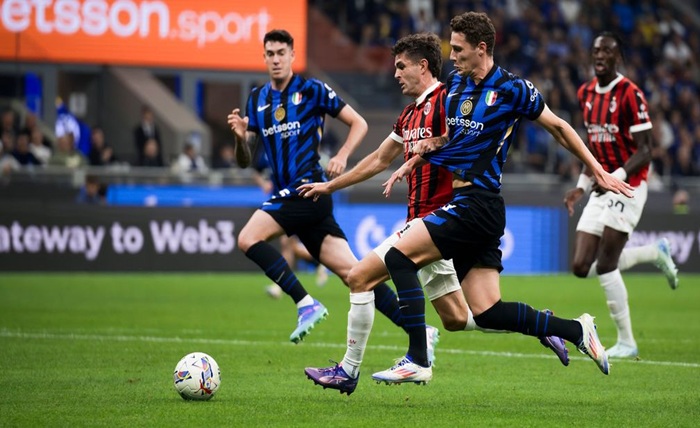
Derby matches in Serie A during 2016/17 – from the Derby della Capitale to the Derby d’Italia – carried emotional and tactical dynamics that often pulled results away from the usual league pattern. For a bettor, that meant standard form-based shortcuts broke down: familiar teams behaved differently under rivalry pressure, referees made tighter or harsher calls, and managers set up with risk profiles that were specific to these fixtures rather than the season as a whole, so understanding those shifts was critical before staking money on any outcome.
Why derby context mattered more than the league table
In regular Serie A fixtures during 2016/17, the league table broadly reflected team quality: Juventus dominated, Roma and Napoli chased, and the rest distributed across European spots and survival battles. In derby matches, that hierarchy repeatedly compressed, as seen when Lazio beat Roma 3–1 in April 2017 despite Roma’s stronger title push, underlining how rivalry intensity can shrink the gap between favourite and underdog. The cause lay in emotional stakes and local pride: players elevated concentration and aggression, while favourites carried additional pressure, leading to narrower margins and more upsets than raw league form implied.
Because of that distortion, bettors who anchored too heavily on the table risked backing big favourites at prices that did not properly incorporate derby volatility. Markets often still rated stronger sides highly, but once historical derby trends and psychological factors were included, the real edge shifted toward more cautious exposure, alternative markets, or even staying away when the emotional temperature made outcomes highly unstable. In other words, understanding why context trumped standings was a first filter before considering any specific bet.
Key 2016/17 derbies that shaped betting expectations
The 2016/17 season included several high-profile derbies and rivalry games – Rome’s Derby della Capitale, the Derby d’Italia between Juventus and Inter, and intense clashes involving Napoli and Juventus – each offering lessons in how rivalry changed risk profiles. For example, Juventus’ 1–0 home win over Inter in February 2017 showed a pattern where the dominant side prioritised control and risk limitation rather than open attacking football, keeping the game tight despite their superior squad. Conversely, Lazio’s 3–1 win over Roma highlighted how an underdog in a derby can exploit emotional swings and counter-attacking space when the favourite is chasing both a title race and local bragging rights.
These specific matches mattered to bettors because they illustrated two very different ways derbies can unfold: either cagey, tactical affairs where the favourite’s main objective is to avoid chaos, or volatile encounters where momentum swings rapidly. Recognising which pattern a particular rivalry tends to follow – backed by recent seasons’ results and tactical approaches – allowed more precise market selection, whether leaning toward unders in controlled derbies or embracing goal-related bets where transitions and emotional surges were more likely.
Tactical adjustments that changed goal and card patterns
Managers in Serie A’s 2016/17 derbies rarely treated these games as just another league fixture; they made adjustments in shape, pressing intensity, and defensive focus that directly influenced scoring and disciplinary trends. When Juventus hosted Inter in the Derby d’Italia that season, Massimiliano Allegri’s side accepted a narrow margin, prioritising compactness and controlled buildup over sustained risk, which naturally pulled the match toward a low total goals outcome. In contrast, the Rome derby involved more transitions and space, as both teams were willing to trade attacks, resulting in a higher scoreline that punished anyone assuming derbies are always cagey.
From a betting perspective, the cause–effect chain runs from tactical plan to statistical pattern: a conservative pressing scheme and double pivot often reduce shot volume and favour unders, while high pressing or man-oriented systems around the midfield can open lanes in behind and raise both goal and card counts. For 2016/17 derbies, studying lineups and likely shapes – three at the back versus four, presence of a dedicated holding midfielder, or deployment of an extra forward – provided a clearer expectation of whether the match would lean toward control or volatility, guiding bets on totals, both teams to score, and cards.
Emotional volatility, discipline, and referee tendencies
Rivalry games inherently carry more emotional volatility, and Serie A’s 2016/17 derbies were no exception, featuring more confrontations, tactical fouls, and pressure on officials than an average league match. That intensity meant that referees’ individual tendencies – how quickly they reached for cards, how they handled dissent, and their tolerance for physical duels – played an outsized role in shaping derivative markets. In a heated contest where the official had a history of clamping down early, card lines and booking points became particularly sensitive to pre-match information about the appointment.
For bettors, the impact appeared in how fast momentum could flip: one controversial decision or sending-off in a derby altered both tactical balance and psychological state much more sharply than in a low-stakes fixture. This magnified the risk of backing heavily odds-on favourites, because a single disciplinary incident could render pre-match form analysis almost irrelevant. The more a particular rivalry had a record of red cards or mass confrontations, the more reason there was to consider cards markets or at least factor that risk into staking and selection.
Mapping derby characteristics to different betting markets
Because derby matches pack several overlapping risk factors – tactical adjustments, emotional swings, and referee influence – choosing the right market often mattered more than predicting the winner. When a matchup historically produced tight scorelines and risk-averse setups, betting angles focused on unders, exact goals bands, or double chance rather than aggressive win-only positions on the favourite. Conversely, in derbies with a proven pattern of open play and counter-attacking chaos, goal-related markets, both teams to score, or even long-shot correct scores became more rational expressions of the underlying dynamic.
To illustrate how different market types respond to derby characteristics, consider the following simple mapping.
| Derby trait | Likely impact on match stats | Markets that align with this trait |
| Conservative tactics by favourite | Lower shot volume, fewer big transitions | Unders, 1‑0 scorelines, favourite win + under |
| History of emotional flashpoints | Frequent fouls, disputes, possible red cards | Cards totals, booking points, sending-off props |
| Underperforming but intense underdog | High effort, sporadic high xG chances | + handicap, goal-scorer odds, BTTS |
| Open, transition-heavy rivalry | More shots, higher xG on counters | Overs, BTTS, multiple goal-bands |
The purpose of this mapping was to turn qualitative derby traits into structured betting choices rather than gut feelings about “passion” or “form goes out of the window.” By attaching specific market types to identified features of a given rivalry, bettors could avoid mismatched bets – for example, backing overs in a derby that historically encourages risk-averse gameplans – and instead align exposure with evidence-based expectations drawn from previous seasons, including 2016/17.
Integrating a betting interface perspective into derby preparation
For many bettors, translating derby analysis into actual bets involves navigating a digital environment where odds, markets, and in-play updates sit side by side. When derby volatility is expected, the way you use that betting interface matters as much as the underlying ideas: pre-match, you might identify specific lines that historically move once team news or weather becomes clear; in-play, you may watch how odds react to early fouls, bookings, or shifts in pressing intensity. In that operational context, the mention of a service like ufabet168 provides a useful example of how a structured online betting site can present multiple derivative markets – from alternative goal lines to cards and player props – which allows a bettor to implement nuanced derby views instead of being forced into a single match-result bet, especially when rivalry narratives and short-term emotion threaten to distort simple 1X2 pricing.
Where pre‑match analysis fails in heated rivalry games
Pre‑match analysis for derbies, even when detailed, hits hard limits because some of the most decisive factors only emerge once the game starts. Temperature of the crowd, individual duels escalating into running battles, or a key player visibly losing emotional control cannot be fully captured by pre‑kickoff models, even if past data hint at volatility. In 2016/17 Serie A derbies, moments like an early goal against the run of play or a contentious refereeing decision often rendered carefully prepared tactical expectations less predictive, forcing a reassessment of risk and edge in real time.
This failure mode matters especially for bettors who treat pre‑match research as sufficient justification to hold positions regardless of how the game unfolds. In intense derbies, clinging to pre‑match convictions after clear on‑pitch evidence contradicts them can turn a previously sound idea into a stubborn leak. A more robust approach treats pre‑match work as a starting template to be updated quickly by live information on pressing, discipline, and psychological balance between the teams.
Summary
Focusing on Serie A’s 2016/17 derby matches shows that the usual short-cuts – league position, recent scorelines, raw goal difference – were too blunt to capture the real risk profile for bettors. What mattered more was understanding how rivalry context reshaped tactics, raised emotional volatility, and amplified referee influence, thereby altering goal and card patterns in ways the market did not always fully price in beforehand. By mapping those factors to specific markets, and by treating pre‑match analysis as a flexible framework rather than a rigid script, bettors could navigate derby uncertainty with sharper, more proportionate exposure instead of relying on generic assumptions about form and favourites.